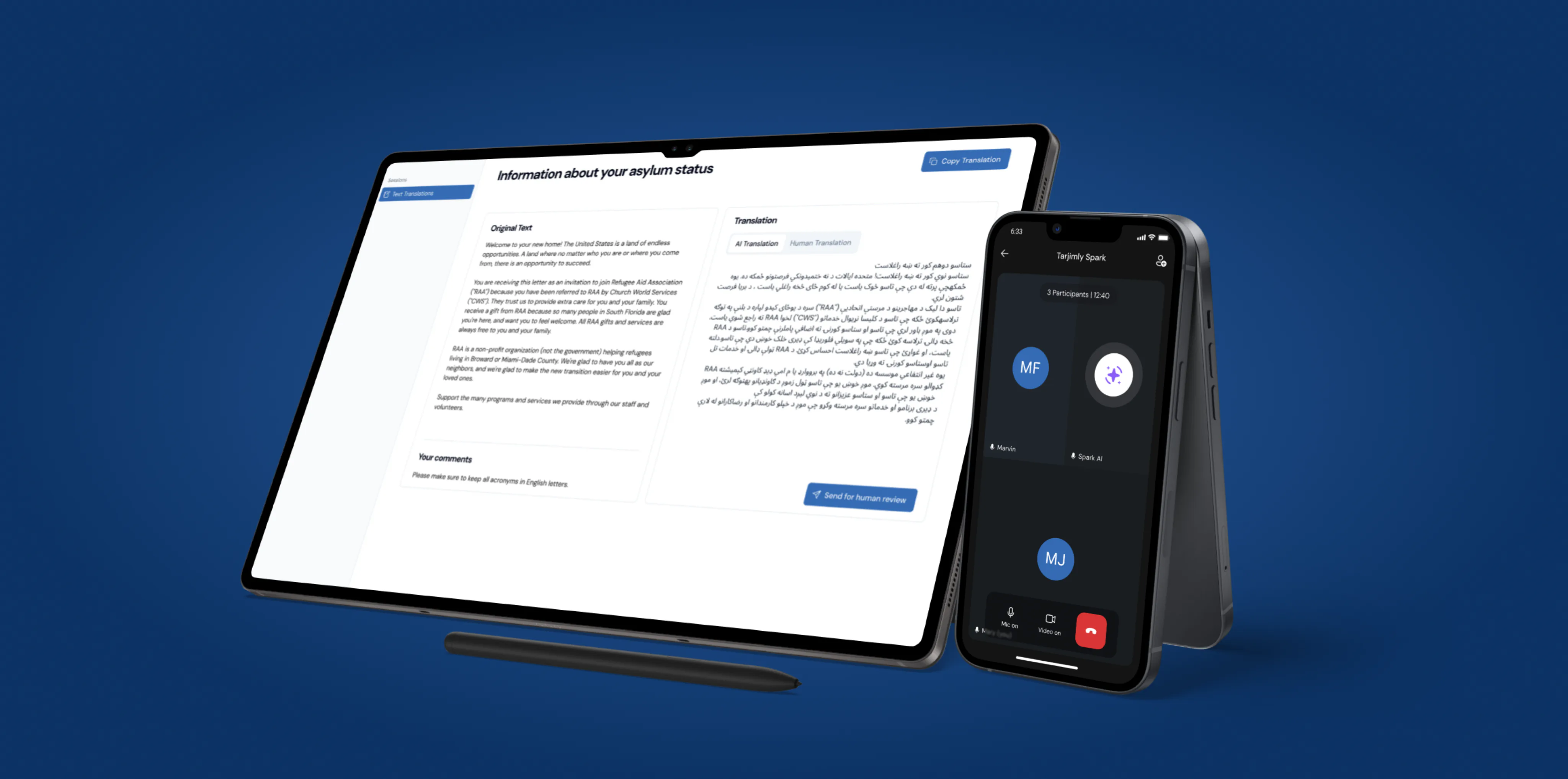
Spark AI was designed to help users get immediate support while waiting for a human translator. I led product design across the first-support chat experience, AI confidence states, escalation to humans and trust design — reducing wait time from 90 seconds to under 3 seconds and cutting abandonment from 25% to 8%.
Context
Tarjimly helps refugees, aid workers and humanitarian organizations connect with translators during urgent moments. These moments can involve medical care, legal help, border crossings, housing support or personal emergencies.
The platform already had a strong translator network, but people still had to wait before speaking with someone. In a crisis, even a short wait can feel long. Some users only needed a quick translation while others needed a real person who could understand the emotional weight of the situation.
The challenge was to help people get useful support faster without removing the human care that makes Tarjimly trusted.
The Problem
The average wait time to reach a translator was 60 to 90 seconds. For someone asking for help in a stressful situation, that silence could feel like the product had failed.
The issue was not only speed. The bigger question was:
"How do we help users quickly while still knowing when a real human needs to step in?"
Some requests were simple. Others needed care, cultural understanding and judgment. Treating every request the same way created unnecessary delay for users and unnecessary workload for translators.
I led the product design for Spark. I focused on the first support experience, the chat flow, the handoff to translators, the trust patterns and the overall user journey from first message to resolution.
Research & Findings
We reviewed over 10,000 chat logs and saw two clear types of requests.
High-care requests
Sensitive situations where users needed empathy, context and human judgment.
Simple requests
Short translation needs, quick clarifications or basic phrases that could be handled immediately.
This shaped the direction of Spark. It was not designed to replace translators. It was designed to reduce the waiting time before useful help arrived.
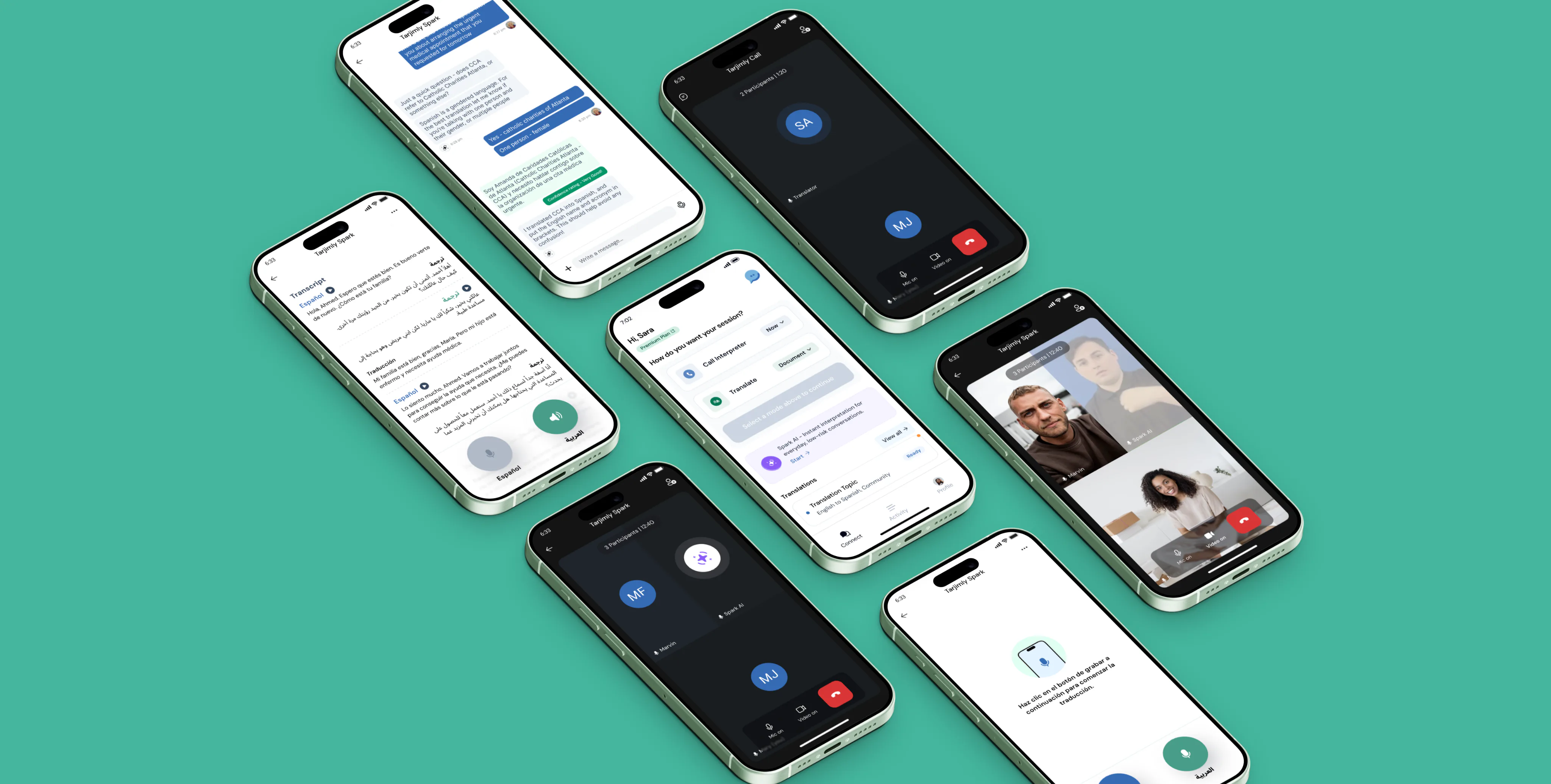
Design Strategy
The main design decision was simple:
"Spark should help with the first mile of support then bring in a human when the situation needs one."
The experience was designed around two paths.
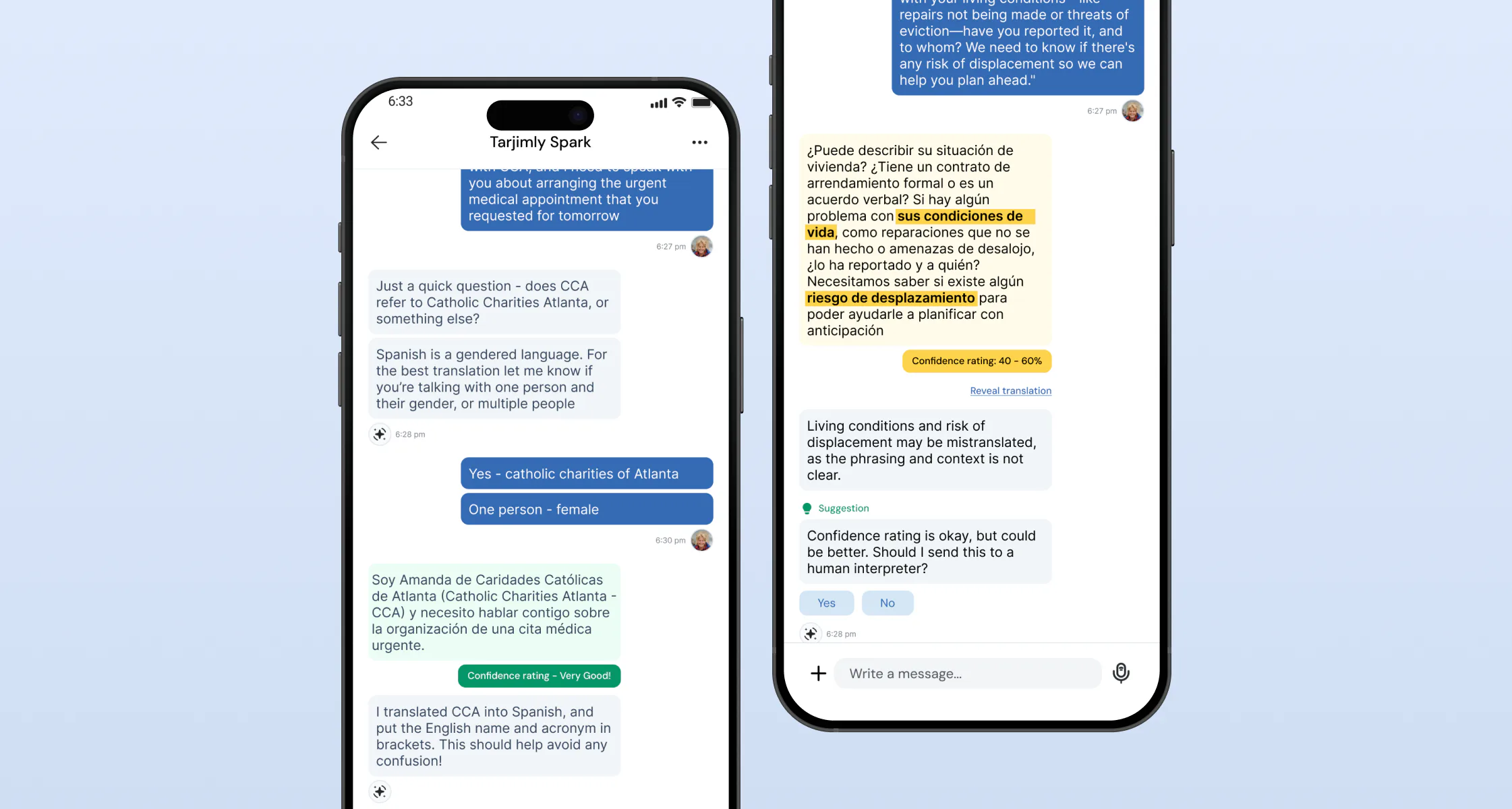
Quick Support
For simple requests, Spark gives users fast help inside the chat.
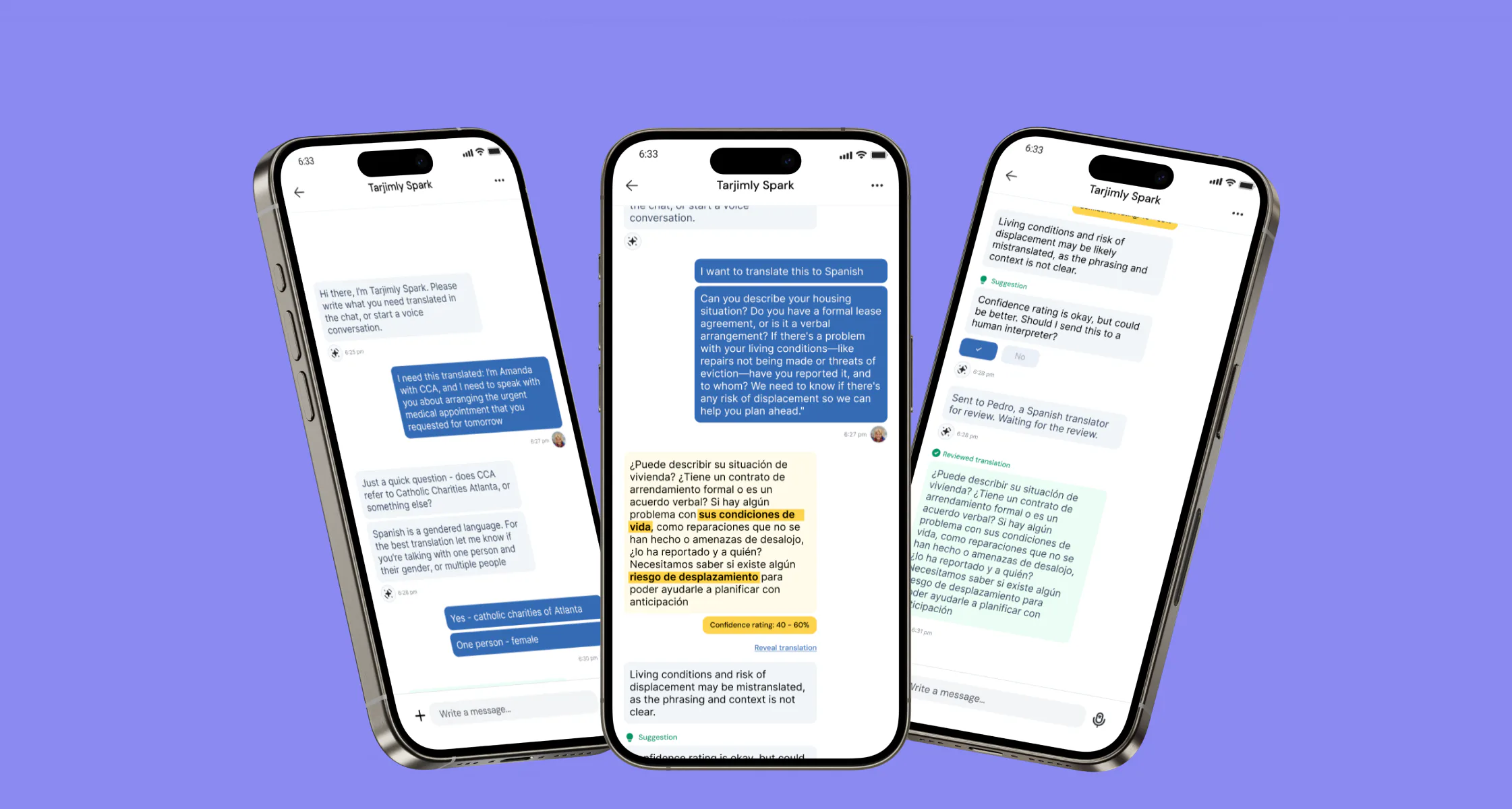
Human Handoff
When the request is sensitive, unclear or too important to handle alone, the system routes the user to a translator and keeps the conversation context intact.
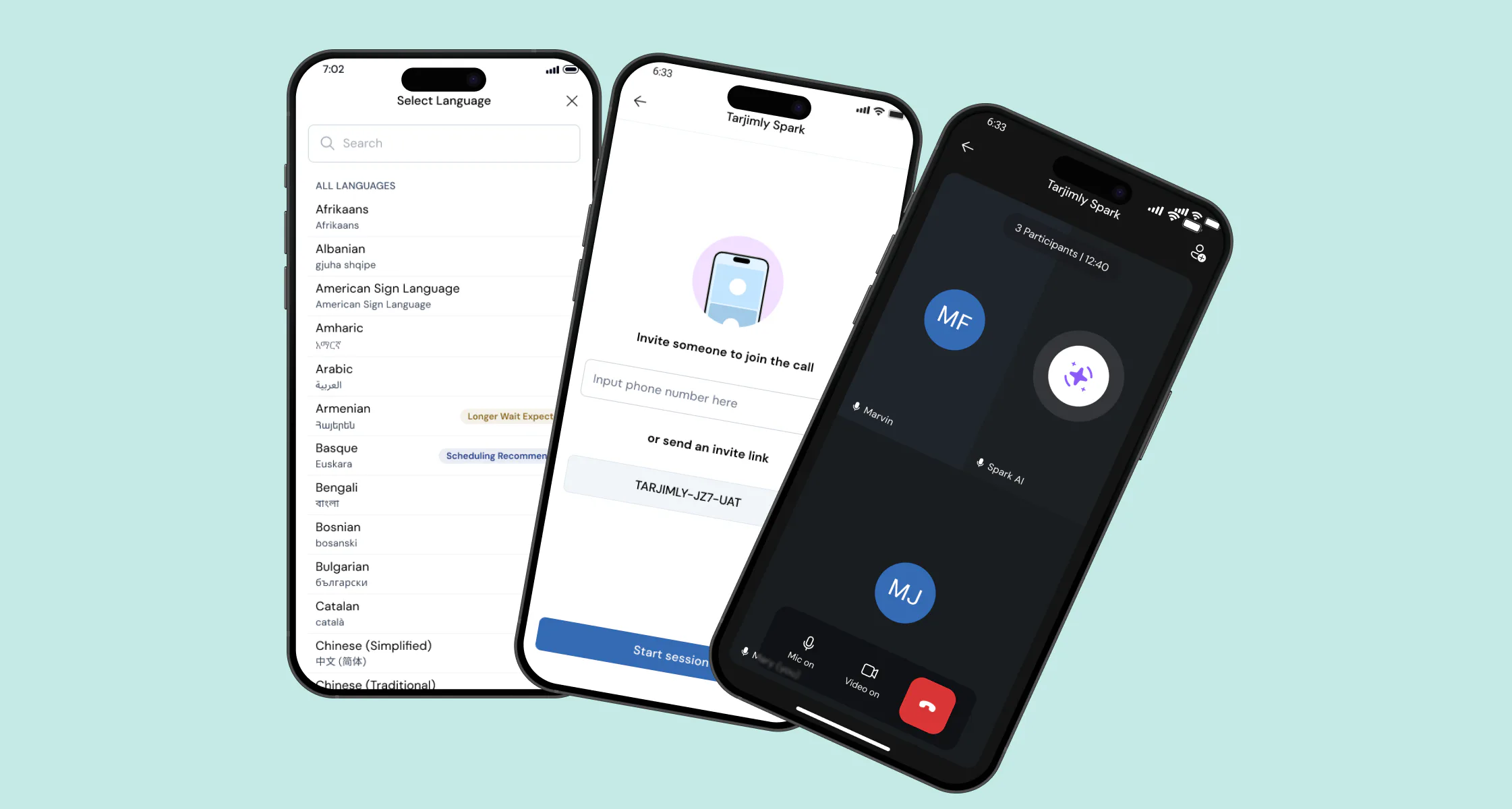
Key Flow
User opens chat → User explains what they need → Spark gives immediate help if the request is simple → User can continue or ask for a translator → Complex requests are passed to a human → The translator joins with the previous context already visible.
Trust and Control
The design keeps the user in control.
Users can ask for a human at any time.
The product avoids acting like it has the final answer in sensitive moments.
The chat keeps the user moving instead of leaving them waiting.
When a translator joins, the user does not have to repeat everything.
The experience feels like support is already happening while deeper help is being arranged.
Outcomes
Spark helped reduce the first wait from 90 seconds to under 3 seconds. Abandonment dropped from 25% to 8% and translators could spend more time on the cases that truly needed human care.
Reflection
Spark reinforced that the best AI products do not remove humans from high-stakes systems. They help people get faster support while making human judgment available when it matters.
Tarjimly FirstPass AI
Senior Product Designer · AI translation workflow